
In Singapore, education is often described as a national sport. From PSLE to O-Levels and A-Levels, students face a string of high-stakes exams. Unsurprisingly, tuition has become part of the culture, with households spending over S$1.8 billion on private tuition in 2023. For many families, tutoring isn’t just a boost — it feels like a necessity.
Now, there’s a new player on the scene: AI tutors. These digital tools promise instant help, personalised lessons, and affordability — and parents are asking: Will AI tutors replace human tutors?
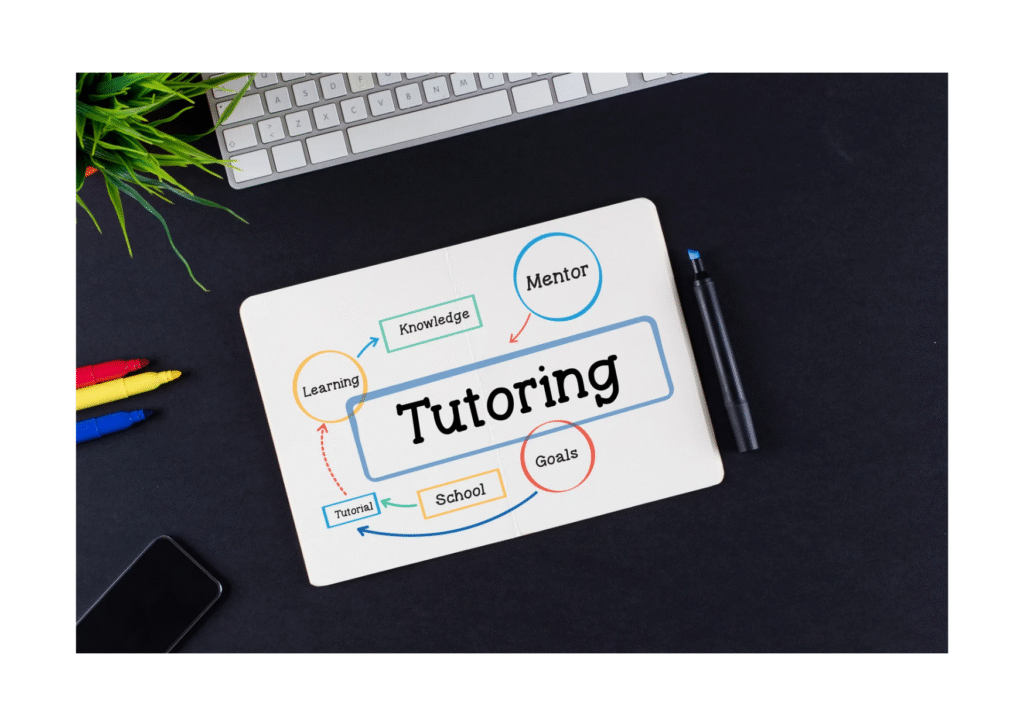
The short answer is: not yet. While AI tutors bring exciting benefits, they also have clear limitations. Let’s dive deeper into what they offer, where they fall short, and why the human touch still matters.
What Is an AI Tutor?
An AI tutor is software powered by artificial intelligence that supports learning. Using algorithms, natural language processing, and adaptive systems, it can:
Generate practice questions and quizzes
Provide instant corrections and explanations
Adjust difficulty based on a student’s performance
Offer subject coverage across Maths, Science, English, and more
In Singapore, several platforms are already popular:
Tutorly – Covers subjects from primary to junior college, with subscriptions starting from around S$49/month.
WizzTutor – Specialises in maths for upper primary to secondary, priced at about S$74/month.
Geniebook – A hybrid edutech brand with AI-powered practice and teacher support, growing rapidly.
The Wise Otter (Telegram bot) – A free AI study buddy that some students turn to when regular tuition slots are full.
Clearly, AI tutors are no longer futuristic — they’re already here, in students’ hands.
Why Parents and Students Are Turning to AI Tutors
- Affordability
Compared to premium tuition centres that charge over S$150/hour, AI tutors can be accessed at a fraction of the cost. - Anytime, anywhere learning
Whether it’s late-night study before an exam or a quick revision during commute, AI tutors are available 24/7. - Instant feedback
Students don’t need to wait for the next lesson. Misconceptions can be cleared up immediately. - Personalisation
AI can adjust practice questions to the learner’s pace and level, providing more tailored support. - Accessibility
For families who can’t afford multiple weekly tuition sessions, AI offers a baseline of academic support at lower cost.
For many parents, this flexibility and affordability makes AI tutors an attractive supplement to traditional tuition.
The Limitations of AI Tutors
Despite the advantages, AI tutors are not without flaws. Here’s what parents and students should watch out for:
- Over-reliance on shortcuts
Students can sometimes key in “I don’t know” and receive a full solution. While efficient, this discourages real problem-solving and critical thinking.
- No human empathy or mentorship
AI can correct an equation, but it can’t cheer a student on, spot anxiety, or adjust tone to keep motivation alive.
- Risk of errors
AI systems sometimes provide incorrect or overly simplistic explanations, which may mislead learners.
- Unequal access
Not every student has reliable internet or a quiet study environment, which may widen the gap.
- Data and privacy concerns
Parents should be mindful of how these platforms handle student data, as AI relies heavily on tracking performance.
Why Human Tutors Still Matter
Here’s where human tutors — whether private or group classes — continue to have the edge:
Exam techniques: Human tutors can coach strategies like pacing, time management, and how to approach tricky O-Level questions.
Psychological preparation: A good tutor motivates, reassures, and builds confidence — vital for high-stress exams.
Diagnosis of deeper issues: While AI can mark an answer wrong, a human can probe why a mistake keeps happening and reteach concepts from a different angle.
Accountability: Scheduled lessons with a tutor provide structure and discipline that on-demand AI apps often lack.
At Szducate, for example, we use our CPF Method (Checks, Pace, Familiarity) to prepare students not just with content knowledge but with the mental strategies to perform under exam pressure — something AI cannot replicate.
Best Way Forward: Blending AI With Human Guidance
So, should parents abandon traditional tuition for AI tutors? The answer lies in balance.
Use AI tutors for practice and quick feedback.
Let human tutors provide exam strategies, deeper understanding, and motivation.
Encourage students to try first, then use AI to check, rather than outsourcing the thinking completely.
In short, AI tutors are useful partners, but not substitutes.
Conclusion
The rise of AI tutors in Singapore signals an exciting shift in education. They are affordable, accessible, and innovative — but they are not a silver bullet. Exams are not just about answers; they’re about technique, confidence, and resilience.
For parents and students, the smartest path is a hybrid approach: let AI handle the drills and corrections, while human tutors nurture thinking skills and exam readiness.
In Singapore’s journey toward the future of learning, the human touch remains irreplaceable.